
Andreea Jercan – baby sleep consultant
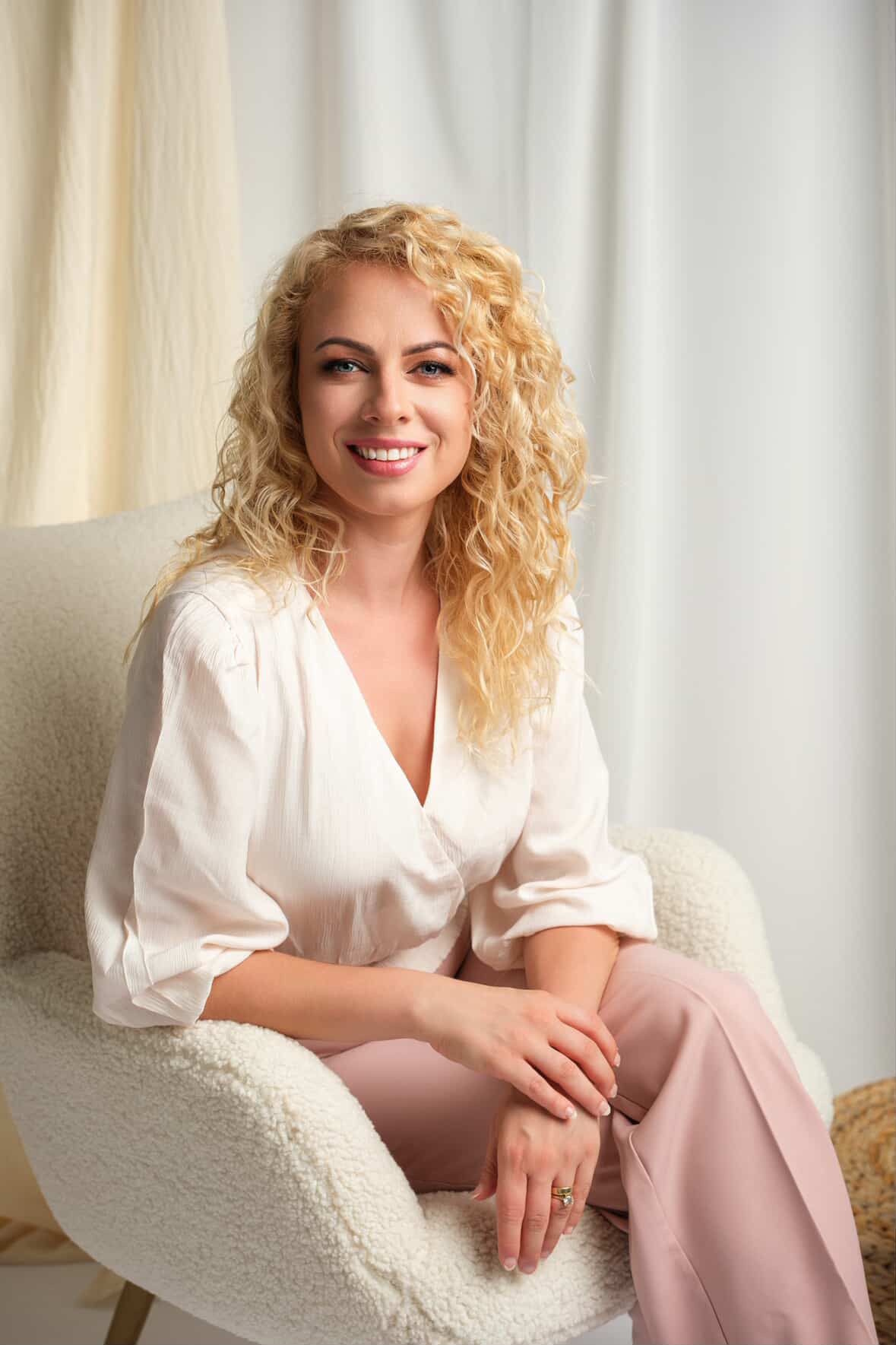
Andreea Jercan is a baby sleep consultant with almost 4 years of experience supporting families through sleep challenges. She views sleep as the result of everything that happens during the day, and even what happened in the womb and childbirth. Her work focuses on identifying the real causes behind sleep difficulties, not just managing symptoms. This holistic perspective guides her approach: sleep challenges are not isolated issues, but reflections of a child’s physiology, experiences, and emotional world.
Andreea offers parents emotional support and a safe, judgment-free space where their struggles are truly understood. Through a gentle, holistic approach, she helps families find solutions that respect each child’s unique rhythm and bring more calm and rest into everyday life.
When we talk about a child’s sleep, it is very tempting to reduce it to a list of visible behaviors: falling asleep easily or with difficulty, waking often or rarely, crying or remaining calm. From this comes the very widespread idea that sleep can be “trained” through sleep-training methods—by shaping a child’s behavior until it conforms to certain expectations.
But sleep, in its essence, is not a behavior. It is not a conscious choice made by the child, nor a skill learned through repetition. Sleep is a biological function, regulated by complex neurophysiological processes: circadian rhythm, neurological maturation, levels of hormones such as melatonin or cortisol, as well as the need for safety and attachment.
To “correct” crying or night wakings through ignoring or conditioning means acting on the symptom, not the cause. Sleep training methods start from the premise that if we change the behavior, sleep is going to improve. In reality, the child does not learn to “sleep better”; what changes is the way they express their needs. A child who is left to cry alone may learn not to call for the parent anymore, but this does not mean they no longer wake up, nor that their body is getting more restorative sleep.
A child’s sleep is not taught. It develops, alongside the maturation of the brain and nervous system. The parent’s role is not to “train” this process, but to support it with patience and care.
Understanding that sleep is not a behavior shifts the perspective: instead of looking for quick methods of control, we support the child’s biological need for safety and connection (the essential conditions for sleep to come naturally).
More details you can find here: